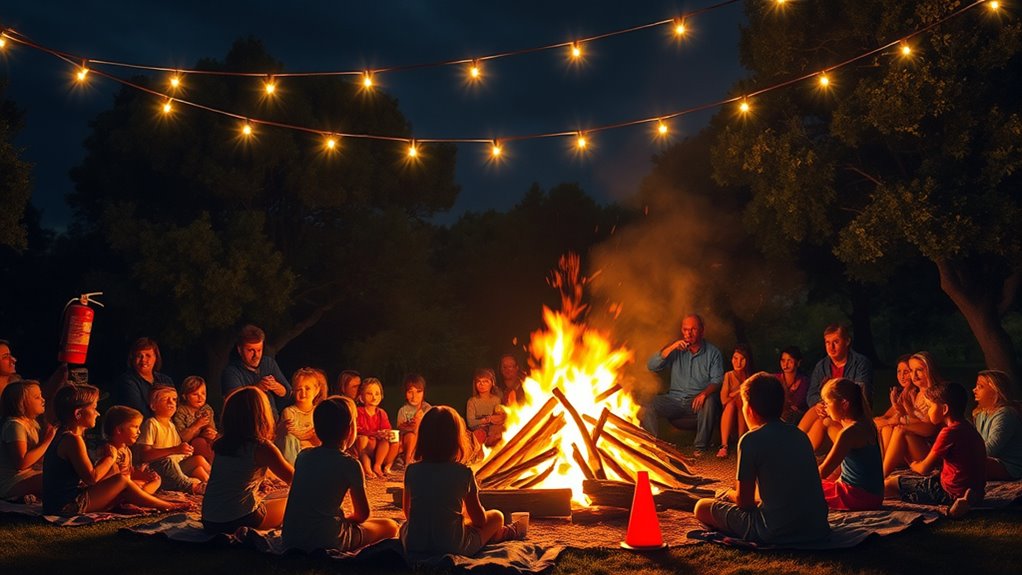

When planning a bonfire event, make sure you select a safe, open location away from hazards and secure necessary permits. Keep fire safety gear nearby, like extinguishers and water, and always supervise the fire closely. Educate your guests on safety rules, manage the fire size, and fully extinguish it when done. Set up lighting and designated areas to maintain a cozy atmosphere while keeping everyone safe. For detailed community practices and helpful safety tips, continue to explore the key steps involved.
Key Takeaways
- Obtain necessary permits and choose a safe, open location away from hazards for the bonfire event.
- Implement fire safety measures, such as keeping extinguishing tools nearby and fully extinguishing the fire after use.
- Inform guests of safety rules, supervise children, and establish clear boundaries around the fire area.
- Enhance ambiance with lighting like string lights while ensuring pathways are well-lit for safety.
- Prepare for emergencies with accessible safety equipment, a first aid kit, and a safety plan for accidents or injuries.
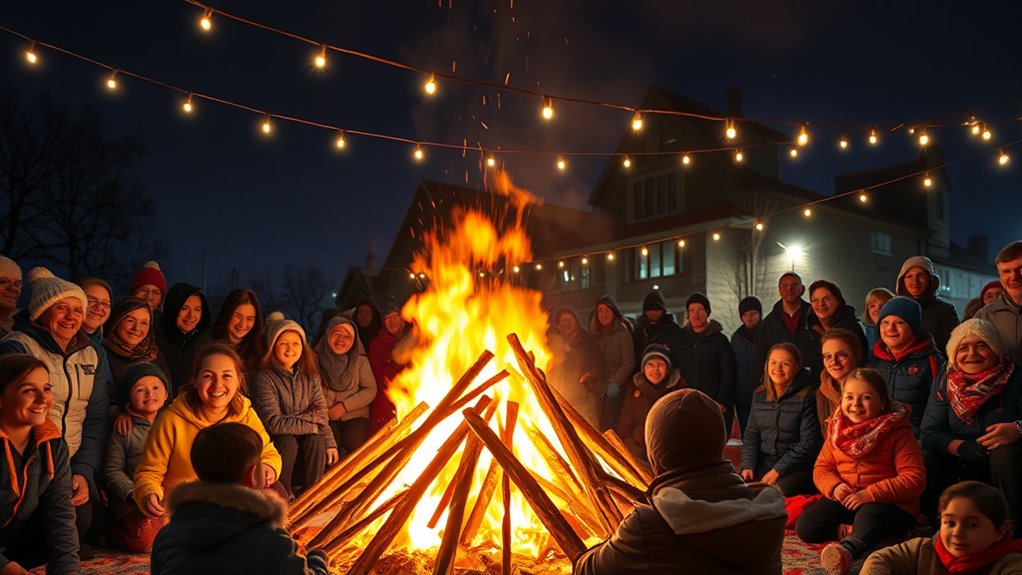
Have you ever experienced the thrill of a bonfire event? There’s something about gathering around a crackling fire that creates a special sense of community and warmth. But before you light that first log, it’s essential to think about fire safety and proper event planning. These two elements are the foundation of a successful and safe bonfire gathering. When you plan a bonfire, you’re responsible for ensuring everyone has fun while staying safe. Start by choosing a safe location, ideally an open space away from trees, structures, and overhead power lines. Check local regulations and obtain any necessary permits—this not only keeps you compliant but also helps you understand specific fire safety rules in your area.
Plan your bonfire carefully with a safe location and proper permits for a fun, secure gathering.
Next, consider the size of your bonfire. It should be manageable, not too large or uncontrollable, which can quickly become dangerous. Designate a clear perimeter around the fire, using rocks or fireproof barriers if possible, to keep guests at a safe distance. Keep a fire extinguisher, a bucket of water, or a hose nearby. Knowing how to quickly extinguish a fire is vital—be prepared for emergencies. Make sure the fire is fully out before you leave the site, pouring water over the ashes and stirring until everything is cool to the touch. Incorporating fire safety measures such as having a designated safety observer can further prevent accidents and enhance overall safety.
Event planning also involves managing the logistics of your gathering. Inform your guests about safety rules beforehand, such as no throwing flammable objects into the fire and watching children closely. Set up designated areas for seating, food, and drinks, keeping them a safe distance from the fire. Consider weather conditions—wind can cause sparks to fly, and rain might dampen your event or make the fire difficult to control. If conditions aren’t ideal, it’s wise to postpone or reschedule.
Additionally, think about lighting and ambiance to create a cozy atmosphere without compromising safety. String lights or lanterns can add warmth and charm while keeping pathways safe and well-lit. Always have a plan for handling accidents or injuries, such as a basic first aid kit on hand. Remember, fire safety isn’t just about the fire itself but also about ensuring that everyone around it remains vigilant and cautious. A well-planned bonfire event isn’t just about the fun; it’s about creating a memorable experience that everyone can enjoy safely. When you prioritize safety and thoughtful planning, your bonfire gathering becomes a highlight for your community—something everyone will look forward to again and again.
fire extinguisher for outdoor fire safety
As an affiliate, we earn on qualifying purchases.
As an affiliate, we earn on qualifying purchases.
Frequently Asked Questions
How Can I Organize a Safe Bonfire Event in My Neighborhood?
To organize a safe bonfire event in your neighborhood, you should prioritize fire safety by choosing a clear, open space away from structures and trees. Engage your community by informing neighbors and encouraging participation. Obtain necessary permits, set clear boundaries, and have firefighting tools like hoses or extinguishers nearby. Keep a responsible adult overseeing the fire, and ensure everyone follows safety guidelines to create an enjoyable, secure event for all.
What Permits Are Required for Hosting a Community Bonfire?
When hosting a community bonfire, you need to check local permit regulations to stay compliant. You typically require a fire safety permit from your city or county, especially if the fire exceeds a certain size or is held in a public space. Contact your local fire department or municipal office to understand the specific permits needed. Ensuring you follow permit regulations helps prevent accidents and promotes safe community gatherings.
How Do I Ensure Environmental Safety During a Bonfire?
To guarantee environmental safety during a bonfire, focus on wildfire prevention by choosing a safe, open area away from dry brush. Use eco-friendly materials like natural wood and avoid plastics or treated woods that release toxins. Keep a water source nearby, and never leave the fire unattended. Afterward, extinguish the fire completely, ensuring no embers remain, to protect the environment and prevent accidental wildfires.
What Are the Best Practices for Managing Large Crowds?
Oh, sure, managing large crowds is a walk in the park—until it’s not. You’ll want effective crowd control measures, like clear signage and trained staff, to keep everyone safe. Safety barriers are your best friends, preventing chaos and accidental falls. Make sure exits are well-marked, and communicate clearly with attendees. Stay alert, stay prepared, and remember: a little planning keeps the bonfire fun, not frantic.
How Can I Promote Inclusive Participation in Bonfire Events?
To promote inclusive participation in bonfire events, you should prioritize cultural sensitivity by respecting diverse traditions and backgrounds. Make sure to include accessibility accommodations, like wheelchair access and sensory-friendly options, so everyone can join comfortably. Encourage open communication and invite feedback from community members to identify any barriers. By creating a welcoming environment, you foster a sense of belonging, ensuring all attendees feel valued and included during the celebration.
bonfire safety gear kit
As an affiliate, we earn on qualifying purchases.
As an affiliate, we earn on qualifying purchases.
Conclusion
As you gather around the bonfire, embrace the warmth, enjoy the laughter, and cherish the memories. Remember to respect the fire, respect the space, and respect each other. Stay vigilant, stay safe, and stay responsible. By following safety tips, practicing community practices, and staying aware, you can turn a simple bonfire into a memorable, safe, and joyful experience for everyone involved. Make safety your priority, and let the flames bring happiness, connection, and community.
outdoor string lights for patio
As an affiliate, we earn on qualifying purchases.
As an affiliate, we earn on qualifying purchases.
fireproof barrier for bonfire
As an affiliate, we earn on qualifying purchases.
As an affiliate, we earn on qualifying purchases.